

How to Choose the Best Sheepskin for Armchairs
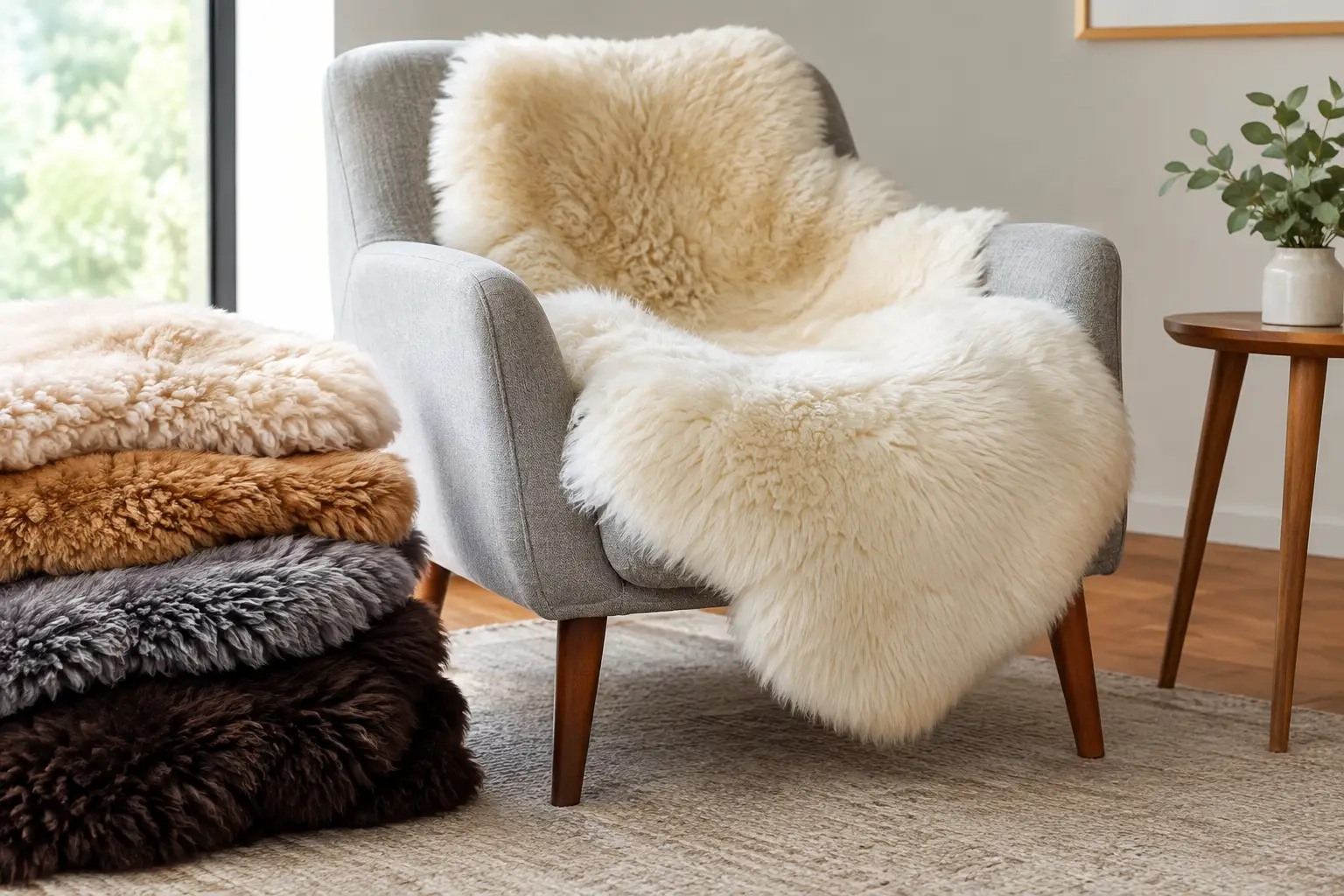
An armchair often earns its place through one small ritual: the book opened after dinner, the cup of tea held in both hands, the quiet corner claimed at the end of the day. The best sheepskin for armchairs should honour that ritual, adding warmth and tactile comfort without concealing the chair’s shape or competing with the room around it.
A genuine sheepskin is more than a decorative throw. Its wool gives an armchair depth, softness and a relaxed sense of luxury, while the natural hide provides a weight and drape that synthetic alternatives rarely match. The right choice comes down to proportion, wool character, colour and the way the chair is used.
What makes the best sheepskin for armchairs?
The finest choice is not necessarily the largest or the fluffiest. It is the sheepskin that sits naturally over your chair, feels generous under hand and retains its beauty through regular use. Look for a carefully tanned skin with a supple leather backing, evenly finished wool and a shape that works with, rather than overwhelms, the furniture.
For a reading chair or occasional accent chair, a single sheepskin is usually enough. It should cover the seat and rise over the back, with enough length to create an inviting fold or drape at the front. On a generous lounge chair, a larger skin can look considered and luxurious, but take care not to bury sculptural arms or a beautiful timber frame.
Authenticity matters here. Genuine sheepskin has natural variation in its wool length, tone and outline. Those subtleties are part of its appeal. A hide that is a little broader through the shoulders or softly irregular at the edge will often look more at home than something overly uniform.
Start with the chair’s proportions
Before choosing, measure the seat width, seat depth and height of the chair back. You do not need millimetre-perfect calculations, but a quick check avoids a skin that feels undersized or swamps the piece.
A compact occasional chair generally suits a smaller single sheepskin. Place it with the wool side up, allowing the neck end to fall over the backrest and the broader section to settle across the seat. For a high-backed armchair, choose a longer skin so the wool reaches down the chair back and still offers softness where you sit.
If your chair has low, wide arms, you may prefer to place the skin slightly off-centre, leaving one arm exposed. This creates an effortless layered look while preserving the chair’s original design. A tailored upholstered armchair may suit a more centred placement, especially in formal living rooms where symmetry brings calm.
Choose wool for the feeling you want
Sheepskin wool is wonderfully varied. Longer wool creates a more relaxed, textural finish, ideal for casual lounges, bedrooms and spaces that invite you to sink in. It catches the light beautifully and brings softness to leather, timber or linen chairs.
Shorter or shorn wool gives a neater appearance and can feel more structured. It is often a sensible option for chairs used daily, particularly where you want the comfort of sheepskin with a more restrained silhouette. The trade-off is visual: short wool is polished and practical, while long wool offers greater movement and a more sumptuous finish.
Density is as important as length. A dense fleece feels supportive beneath you and holds its character well. Gently part the wool with your fingers when viewing a skin. You are looking for an even, healthy fleece with natural lustre, rather than sparse fibres or an overly artificial sheen.
Sheepskin also responds to the seasons. Wool helps create a comfortable microclimate, feeling cosy when the weather turns cool without making an armchair feel exclusively wintery. That makes it a worthwhile layer in New Zealand homes, where a sunny room can still feel crisp by late afternoon.
Natural ivory, soft neutrals or a confident colour?
Natural ivory remains a favourite for good reason. It brightens dark upholstery, softens black leather and works easily with oak, rattan and pale painted finishes. In a quiet, neutral interior, its subtle tonal shifts bring life without introducing another strong colour.
However, the best sheepskin for your armchair may be a deeper hue. Charcoal, stone and warm brown tones can ground a pale chair and are often forgiving in family spaces. A rich dyed shade can turn a simple armchair into a focal point, particularly when repeated in a cushion, artwork or rug elsewhere in the room.
Consider the room’s light before deciding. Natural wool can appear warmer in late-day sun and cooler under crisp morning light. In a south-facing room, cream and oatmeal shades bring welcome warmth. In a bright, sunlit space, deeper neutrals may provide balance and definition.
Think about daily life, not just the photograph
A sheepskin that looks exquisite in a styled room should also suit the way you live. If the armchair is a favourite spot for children, pets or a nightly television session, choose a colour and wool length you will be comfortable maintaining. Pale, long-wool skins are beautiful, but they ask for a little more care in a busy household.
That does not mean reserving sheepskin for formal rooms. It means choosing honestly. A mid-tone skin on a well-used chair may be the more enduring option, while a natural ivory fleece can be perfect for a bedroom armchair or a peaceful corner away from food and muddy paws.
For leather armchairs, sheepskin adds welcome softness and stops the seat feeling cool on winter mornings. On upholstered chairs, it introduces contrast: wool’s organic texture looks especially handsome against tightly woven linen, velvet or boucle. Timber-framed armchairs benefit from a skin that cushions the seat while leaving enough of the frame visible to appreciate its craftsmanship.
Look beyond surface softness
The quality of tanning and finishing shapes how a sheepskin performs over time. A well-prepared hide should feel flexible rather than stiff, allowing it to settle comfortably over curved upholstery. The leather backing should lie flat without looking brittle or excessively thin.
Careful finishing also affects the appearance of the fleece. Wool should feel clean and inviting, not coated or plasticky. Natural variation is expected, but bald patches, loose fibres or inconsistent texture are signs to look at more closely.
New Zealand sheepskin is valued for its quality and character, and provenance gives buyers a clearer connection to the material in their home. Bowron’s Christchurch tannery heritage reflects the value of sheepskin that is skilfully processed and tailored close to its source, from locally farmed skins to finished home pieces.
For interior designers and trade buyers, consistency may matter just as much as individual beauty. Matching several armchairs calls for pelts with a harmonious tone, wool length and overall scale. It is worth viewing the skins together where possible, as natural materials will always carry individual differences.
Styling a sheepskin so it stays in place
There is no need to over-style sheepskin. Let the wool fall as it wants to, then make a few small adjustments. Position the most attractive, fullest section where it will be seen and felt, usually across the chair back and seat. Tuck a small amount behind the back cushion if the chair allows it, which can help anchor the skin without hiding its natural edge.
If the hide shifts on slick leather, a light reposition after use is usually all that is required. Avoid permanent adhesives or pins, which can damage both the chair and the backing. A sheepskin should remain easy to lift, air and shake out.
Pair it thoughtfully. One wool cushion in a similar tone can create a considered layer, but too much matching fleece can make an armchair feel overly dressed. A linen cushion, a woven throw nearby, or a timber side table gives the natural wool room to stand out.
Caring for your armchair sheepskin
Regular, gentle care keeps wool fresh. Take the skin outside on a dry day for a light shake, then allow it to air away from harsh direct sun. Brush long wool occasionally with a suitable wool comb or gentle brush, working slowly to lift the fibres rather than pulling at them.
Attend to small spills promptly by blotting with a clean, absorbent cloth. Avoid soaking the leather backing, using strong household cleaners or placing a sheepskin over direct heat. If professional cleaning is needed, choose a specialist experienced with sheepskin rather than treating it as an ordinary rug or blanket.
With a little care, the right skin becomes less like an accessory and more like part of the chair itself: a naturally beautiful layer that makes an everyday place feel distinctly yours.
 PlatinumStar
 Gold Star
 Country Living
 Arctic Fleece
 BabyCare
 PetCare